





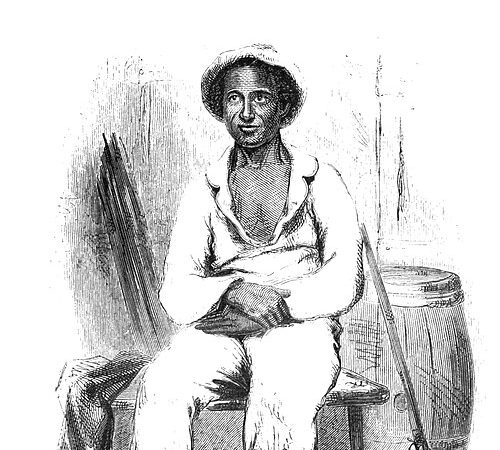
For many, the name Solomon Northup brings to mind the Academy Award-winning film 12 Years a Slave, a powerful depiction of one man’s harrowing journey through forced servitude. Yet, before the cinematic adaptation and even before his famous memoir, Solomon Northup was a free man from upstate New York, deeply rooted in the communities of Washington County. Join us as we explore the early life of Solomon Northup, revealing how his formative years in this picturesque region shaped the resilient individual who would later defy the unimaginable.
Born Free in Upstate New York, Raised in Washington County

Solomon Northup, the famed author of Twelve Years a Slave, was born a free man around 1807 or 1808 in Minerva, New York. His mother was a free woman of color, and his father, Mintus Northup, was an emancipated former slave. This meant Solomon and his brother were born free, a rarity in that era.
Shortly after Solomon’s birth, the Northup family planted new roots in Washington County, New York. First, they lived in Slyboro (today part of Granville) and briefly in Sandy Hill (now known as Hudson Falls). However, it was the town of Fort Edward along the Hudson River where Solomon spent his formative years.
Growing up in Fort Edward in the early 19th century, Solomon enjoyed a childhood of relative freedom and normalcy for a free Black family in upstate New York. He received an education “as much as [his] father could afford,” attending a local school that still stands today on Notre Dame Street. Young Solomon helped on his family’s farm and honed skills that would shape his life: he became an accomplished violinist and a hardworking laborer. In fact, he earned a reputation as a skilled fiddler, often entertaining neighbors. In addition, he labored on the construction of the Champlain Canal, rafting timber down the canal waters.
These early experiences in Washington County–farming the land, navigating waterways, and playing music–all took place against the backdrop of a tight-knit rural community that treated the Northups with respect. Fort Edward historian Paul McCarty notes that Fort Edward’s residents, even in those decades, “never put up roadblocks” to Solomon’s education and involvement in community life. This supportive environment no doubt nurtured Solomon’s talents and confidence as a free Black man in the North.
Plus, Solomon’s own father’s hard work and desire exemplified the family’s independence and respectability: After gaining freedom from enslavement, Mintus bought land in Washington County, meeting the property requirements to vote as a Black man.
Thus, by the time Solomon Northup reached adulthood, his family had become part of the very fabric of Washington County as landowners, community members, and witnesses to the region’s growth. Solomon’s true historical roots are deeply entwined with Washington County’s soil.
Solomon Northup’s Home and Family in Fort Edward
By the late 1820s, Solomon Northup was a young man making his own way in Washington County.
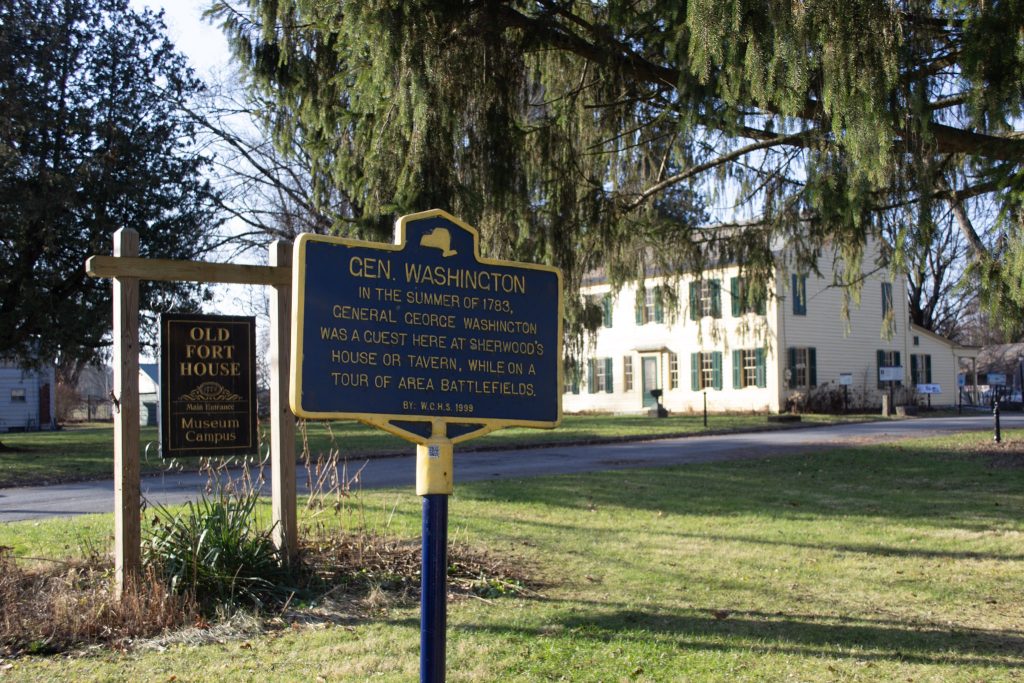
On Christmas Day in the late 1820’s, Solomon married Anne Hampton, a young woman from nearby Sandy Hill. Their wedding took place in Fort Edward; local lore says it was on the lawn of a modest boarding house at the southern end of town. That boarding house still stands today, known as the Old Fort House Museum! In fact, after their marriage, Solomon and Anne made their first home in that very house, boarding there for several years while they started their family. Little did they know that this home (now a popular museum) would one day become a cherished historic site where their story is preserved.
Life in Fort Edward was busy and hopeful for the young Northup family. Solomon worked multiple jobs to support his household. He farmed in the surrounding countryside, did carpentry and construction work, and continued to play his violin whenever opportunities arose. Anne was renowned for her cooking and took jobs as a cook at local taverns and hotels when she could.
In the early 1830s, Solomon and Anne purchased a small farm in the town of Hebron. Balancing agriculture with other work, they raised produce and perhaps livestock, embodying the hard-working spirit of the county’s rural communities. It was during this period in Washington County that the Northup children were born: Elizabeth around 1831, Margaret in 1833, and Alonzo in 1835. One can imagine Solomon finishing a day’s labor in the fields of Washington County, then coming home to play lullabies on his fiddle for little Elizabeth and Margaret. Those were likely some of the happiest and most stable years of Northup’s life, when he lived as a free man prospering on his own land in upstate New York, surrounded by family.
By 1834, Solomon saw an opportunity to further improve his family’s fortunes. Work could be scarce in the winter months, and the bustling tourist economy of nearby Saratoga Springs beckoned. That year, Solomon sold the family farm and moved the family about 20 miles to Saratoga Springs. There, his musical talents as a fiddler found great demand among the resort hotels, and Anne’s cooking skills secured her jobs in Saratoga’s establishments.
The Northups left Washington County in pursuit of greater economic opportunity, not knowing the twist of fate that awaited them in Saratoga. However, Washington County remained their first true home, and Solomon’s ties to this region would prove crucial even after tragedy struck.
The Ordeal of “Twelve Years a Slave”
In Saratoga Springs, Solomon Northup’s life took a dramatic and dreadful turn that would make him an unwitting figure in American history. In the spring of 1841, while Anne was working at a local hotel and Saratoga’s tourist trade was gearing up for the season, Solomon was introduced to two men seeking musical entertainment for a traveling show. They had heard of his excellent violin skills and offered him a generous short-term job in New York City.
With the slow winter season ending and work scarce, Solomon decided to seize the opportunity. He could not have imagined that this decision would lead him over 1,000 miles from his home and family.
The two men then lured Northup away from New York to Washington, D.C. under false pretenses, claiming their circus needed a talented violinist. In Washington, D.C. (where slavery was still legal at the time), Solomon was drugged, kidnapped, and sold into slavery. He awoke in chains in a slave pen, powerless and without any proof of his identity as a free New Yorker. Thus began the harrowing chapter of his life that he later recounted in his memoir, Twelve Years a Slave.
He was shipped to New Orleans and sold to plantation owners in Louisiana. For 12 years, from 1841 to 1853, Solomon Northup endured the brutality of enslavement, laboring on cotton and sugar plantations in the Deep South. He survived physically and spiritually by holding onto memories of his family and his upbringing. Not once during those years did he reveal to those around him that he was a free man from the North, yet he never lost hope that he would see freedom again.
Back in Washington County and the Saratoga region, Solomon’s disappearance remained a mystery. Anne Northup was left to fend for herself and their children, supporting her family without knowing what happened to her husband. Finally, in 1852, Solomon confided his story to Samuel Bass, a Canadian carpenter working at the plantation in Louisiana. Bass bravely sent letters north on Solomon’s behalf. After circuitous attempts, one of these letters reached Anne and friends in Saratoga, and they, in turn, contacted the one man who might be able to help: Henry B. Northup of Sandy Hill, Washington County.
Henry B. Northup was a trusted attorney and political figure in Washington County. He was also the grand-nephew of the very man who had freed Solomon’s father years before. Upon hearing of Solomon’s dire situation, Henry B. Northup began a rescue mission to bring Solomon home. Armed with affidavits proving Solomon’s free status and supported by New York Governor Washington Hunt, Henry B. traveled to Louisiana in the winter of 1852-53. By January 1853, he had traced Solomon’s whereabouts and legally compelled the planter to release him.
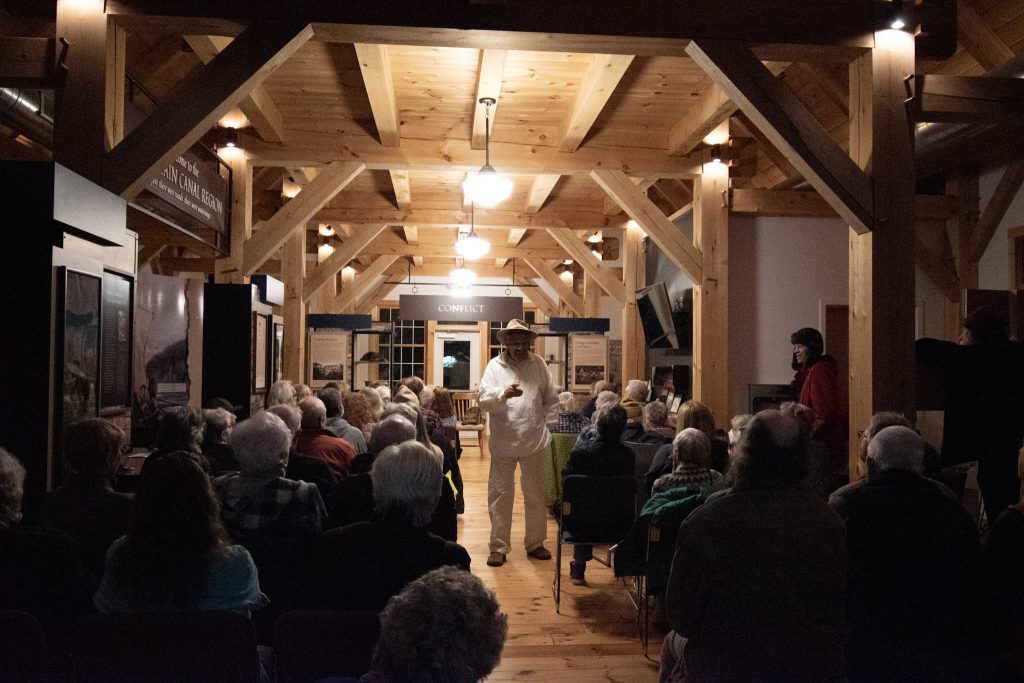
Solomon Northup, Free Once Again
After twelve years in bondage, Solomon Northup regained his freedom. In a moving scene famously depicted in his memoir, he returned to his family in upstate New York in January 1853, reuniting with Anne and his children in Saratoga.
Later that year, Solomon’s autobiographical narrative Twelve Years a Slave was published (1853). His personal account of kidnapping and enslavement, told with unwavering honesty and rich detail, became one of the most important slave narratives of the 19th century. It opened Northerners’ eyes to the cruel realities of human trafficking and slavery happening even to free citizens, and it cemented Solomon Northup’s name in history.
However, despite enjoying some fame as an author and abolitionist speaker for a few years, Solomon’s later life remains murky. He likely toured giving lectures across the Northeast, advocating for abolition. By the late 1850s, records of Solomon Northup fade. The last known mention of him alive was in the late 1860s, and the exact circumstances of his death are unknown. What endures unequivocally is his story, one that continues to resonate and educate.
Touring Solomon Northup’s Washington County Today
Today, Washington County celebrates Solomon Northup as a native son and strives to preserve the sites connected to his life. For those interested in experiencing Solomon Northup’s history firsthand, Washington County offers several key sites and a chance to literally walk in his footsteps. Here are a few must-see locations and tips for exploring Northup’s Washington County heritage:
- Old Fort House Museum (Fort Edward) – Start at this beautifully preserved 18th-century house where Solomon and Anne Northup once lived. Now a museum, it welcomes visitors from June to October for tours. You can explore the Solomon Northup exhibit, complete with authentic 19th-century furnishings and artifacts, including a copy of Twelve Years a Slave. Outside, visitors are welcome to read the historical markers and imagine the scene when Solomon and Anne were married on this very lawn. The Old Fort House Museum grounds also include gardens and outbuildings, so allow an hour or two to soak up the ambiance of early Fort Edward life!
- Fort Edward & Hudson Falls Historic Spots – While in Fort Edward, take a short stroll or drive to see a couple of other related sites! The old schoolhouse on Notre Dame Street where young Solomon studied still stands (now a private building). Likewise, the farmhouse on the same street that the Northup family once rented is largely intact. These are not formal attractions, but a quick view from the street can transport you back to the 1820s when Solomon chased his education and helped his father with chores on those grounds. In neighboring Hudson Falls, history enthusiasts can visit Baker Cemetery to pay respects to Mintus Northup. The new headstone for Mintus is easy to find: a humble monument connecting the modern visitor to Solomon’s beloved father. It’s a sobering but important stop that underscores the Northup family’s deep roots in this region.
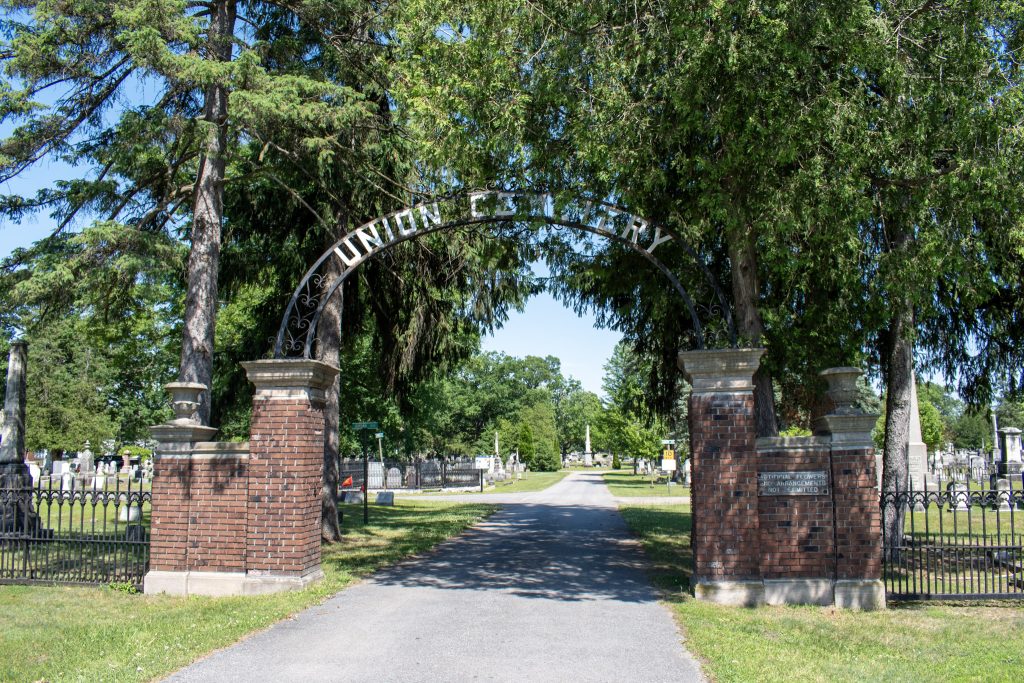
- Union Cemetery (Fort Edward) – This peaceful cemetery in Fort Edward holds the grave of Henry B. Northup. In 2014, an informational plaque was placed here to share Henry’s role in Solomon’s story. Consider a brief visit to reflect on the courage it took for a small-town attorney from Washington County to travel to the heart of the antebellum South and liberate his friend.
As you explore Solomon Northup’s Washington County, you’ll not only absorb the history of one man’s incredible journey from freedom to slavery and back, but you’ll also experience the charm of a region rich in American history. From the mighty Hudson River in Fort Edward to the rolling hills of Hebron, the landscape still looks much as it did in Solomon’s day. It’s not hard to imagine horse-drawn wagons, canal boats, and fiddle music in the air.
By following Northup’s tale through these towns and landmarks, visitors gain a profound appreciation for the true story behind 12 Years a Slave and how a small Upstate New York community shaped a man whose courage and resilience continue to inspire.