







WELCOME TO
ARGYLE, NY
ABOUT ARGYLE
Scottish roots and rolling farmland give Argyle, New York, a character all its own. This rural community in Washington County invites you to take the back roads, slow your pace, and get to know a place shaped by generations of country life.
Wander through Argyle, where farm stands share the harvest and country stores offer something tasty to bring home. Between the fields and forests, you’ll find artists’ studios and opportunities to meet some curious farm animals.
In the village, follow the Moses Kill past reminders of Argyle’s milling days and discover the stories behind its historic buildings. From its Scottish beginnings to the farms and makers here today, Argyle gives you plenty to explore at a country pace.
Argyle is best known for:


THINGS TO DO IN ARGYLE, NY
Shop Farm Stands and Country Stores
Pull up a chair at the Auction Barn Restaurant, stock up on smoked meats and cheeses at Locust Grove Smokehouse & Country Store, pick up seasonal produce at Butternut Ridge Farm or pick your own potatoes in the fall at Goose Island Potatoes. Argyle, NY serves up plenty of local flavor!


Meet the Farm Animals
Saddle up for trail riding at 4J Farmm, or get some face time with the friendly goats at Sperry Family Farm. These hands-on experiences bring Argyle’s farming roots to life.
Discover a Historic Landmark
On Main Street, the Ransom Stiles House was the home of a local merchant and abolitionist that’s believed to have been connected to the Underground Railroad. Explore its story through our guide to Washington County’s Underground Railroad sites.

Argyle is best known for:
EXPLORE MORE THINGS TO DO IN ARGYLE


A BRIEF HISTORY OF ARGYLE, NY

1600s
Before it was the town of Argyle, the Mohicans and the Mohawk tribes used the land as hunting and fishing grounds, and for fur trading with the Dutch New Netherland Colony at Fort Orange (present-day Albany).
1700s
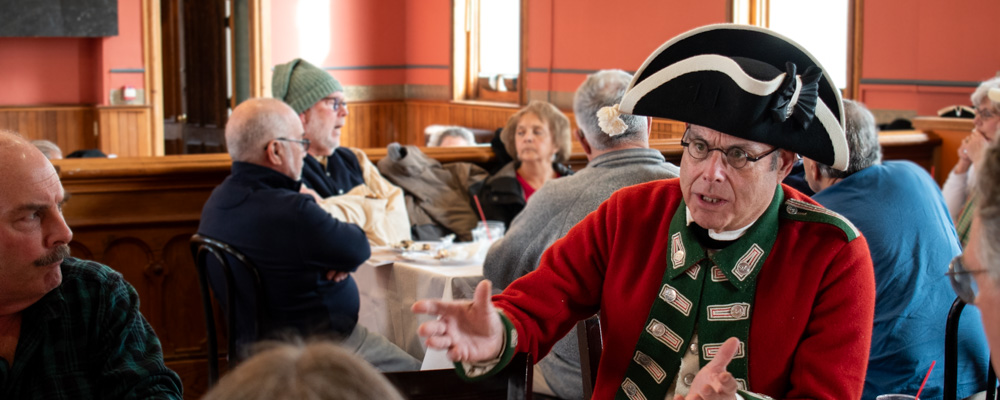
The first European settlers arrived from Argyllshire, Scotland. German, Irish, Dutch and Polish settlers were also attracted to the area. In 1786, Argyle was officially formed as a
town, named such to honor its founders’ native lands.
1900s
The Moses Kill provided
waterpower for mills in the village and later, running water for the residents. The library was built & expanded.
Today
Argyle is a melting pot and no longer a purely Scottish community. However, the agricultural aspect of the settler’s native home had some lasting influence, since modern-day Argyle is still fairly rural. Fun Fact: Until 2019, Argyle was one of New York’s few remaining “dry towns,” and the largest!
Scottish Roots and the Argyle Patent
Argyle takes its name from Argyllshire, Scotland, the ancestral home of many early European settlers. Scottish Highlanders helped establish the community during the eighteenth century, bringing traditions that became part of its identity.
Alexander McNaughton helped organize settlement and secure land rights. In 1764, the British colonial government approved the Argyle Patent, granting more than 47,000 acres across an area larger than today’s town.
Argyle During the American Revolution
The Revolution divided local loyalties between the British Crown and the Patriot cause. During the Saratoga Campaign in July 1777, members of the John Allen family and their household were killed in South Argyle. A memorial at Prospect Hill Cemetery honors those who died.
Farms, Mills, and Community Life
Agriculture became central to Argyle’s economy, with livestock, grain, and dairy farming shaping the landscape. The Moses Kill powered lumber and grain mills, helping support village commerce.
During the nineteenth century, local abolitionists connected Argyle to the movement to end slavery. Libraries and community institutions also developed alongside its farms and businesses.
Follow the Washington County History Trail to explore more of the region’s historic places.


 #WASHINGTONCOUNTYNY


